
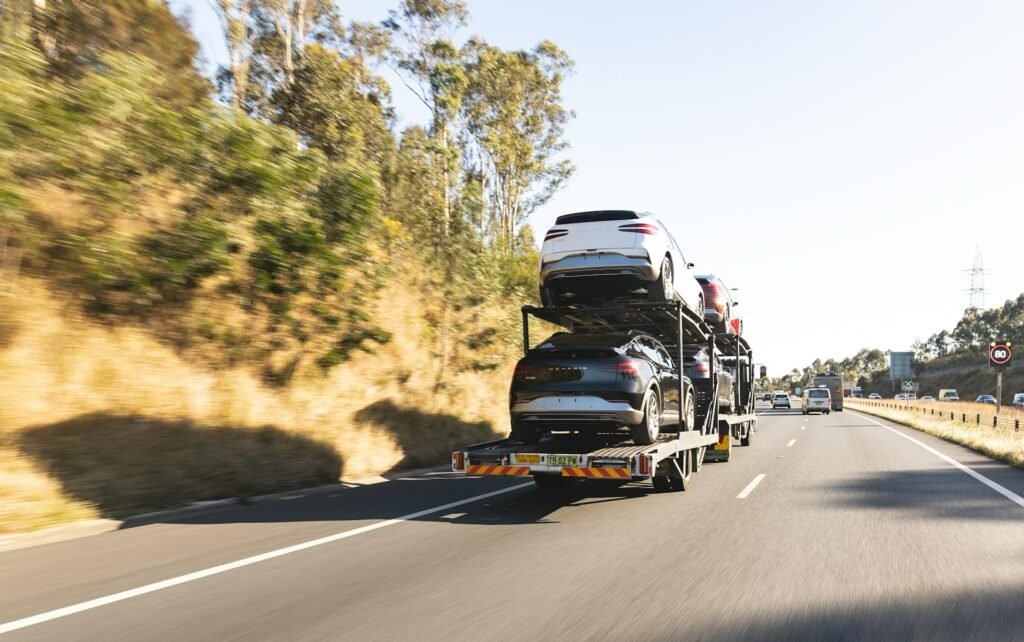
Many families make large moves to a new state with months’ notice. All the removalist quotes, school enrolments and lease start dates are double-checked. Then, it feels like the cars will magically appear at the new address two or three days after arrival. For two cars, that means both adults may need to drive the family fleet.
Why driving all vehicles yourself is often a false economy
Calculating the costs of a multiple-vehicle convoy suddenly becomes less simple. Petrol for a 400 to 600 kilometre route comprises only a small portion of total expenses. Accommodation for a two-night drive if the interstate trip falls on a weekend, plus food on the road and tolls, especially traversing Sydney to Canberra, add up. The route from Sydney to Canberra comprises several tolls and if the driver doesn’t have an active E-Toll or Linkt account allocated to both vehicles, invoices will arrive at a postal address no longer used.
More worryingly, the physical and mental toll of driving one car while a partner leads the convoy in another, with the children split between vehicles, is massively underestimated during planning and painfully obvious during recovery. A family arriving at its new home, strewn with boxes and two days on the road already feels like an endurance test.
Professional interstate haulage removes those variables and, for families, the costs are often surprisingly low. For the 400,000 plus Australians who move house every year, the vehicle transport sector can carry two, three, or even four cars in a single trip for a small fraction of the total cost once all driver-related expenses are factored in.
Considering whether to go with door-to-door or pickup/drop off at depots
With the multi-car transport calculations done and the family having a short-cut to sanity on that front, there is one more big decision to make. Is it to go with door-to-door services, essentially using the family home as a pickup and delivery depot for the carrier, or is there significant value in cutting costs by swapping the 40-minute drive in a taxi for a 200+ dollar saving and delivering all vehicles to and from the carrier’s depots?
An infographic in a vehicle brochure may include a disclaimer about ‘street access’ that is easily overlooked during the planning stages. Car carriers are 20-25 metres long, so for those with a carpark at the front of their residence and a few other considerations, this is a critical consideration to avoid heartache later.
If the street has powerlines running overhead or is too steep for the carrier to navigate, it is inaccessible. Likewise, if there is no through-road to or from the new address or if the carrier cannot reverse out of the family’s front driveway, a meet-at-the-road scenario unfolds, sometimes with little or no warning.
For most families, a mix of options is available, where the vehicle pickup can be at a depot, usually with more flexibility on timing, while the drop-off at the new address can be door-to-door. Ask the carrier about the options before finalising any agreement to move vehicles.
Unusual vehicles require additional discussion
Families with modified four-wheel drives, lowered performance cars or other vehicles that cannot be relied on to start should provide full details when arranging car transport newcastle to canberra, rather than expecting the carrier to take them as is. Carriers need to know at the time of booking what modifications are in place on unusual vehicles.
Lowered vehicles present a challenge to ramp height, and roof racks, bull bars, snorkels, generally change the parameters of the vehicle for loading on a multi-car trailer. Vehicles that cannot be relied on to start require winching procedures which not all carriers offer. Each of these variables influences the quote price, the type of vehicle carrier used and the equipment brought to hand at time of pickup.
The rule of thumb is to put everything on the table when booking the vehicle transport since the Australian Design Rules, while confirming the vehicle is road legal, don’t necessarily apply to transport requirements. A carrier who turns up at the front door to a vehicle much different to the one described during booking has every right to refuse transportation on arrival.
Insurance and what the carrier’s liability specifically entails
Transit insurance is not the same thing as full coverage, and that nuance is exceptionally important for valuables exceeding $40,000.
Standard carrier liability insurance generally covers the costs of damage incurred as a result of the carrier’s negligence. This includes tie-down failures, incidents during loading/unloading or chain damage to a panel. It rarely encompasses pre-existing damage (this is why condition reports make families feel as though it’s Oscar season), damage to loose or personal effects and, in many cases, weather-related incidents, assuming the carrier can demonstrate professional protection of the goods.
Ask the carrier in writing what their particular transit insurance covers and what the claims procedure is. Likewise, review your private motor vehicle insurance to see if it covers the vehicle during transit. Both are valid lines of inquiry, although it’s easy enough to call an insurance provider and ask within ten minutes of receiving your carrier quote.
The rule of thumb is that if the coverage is something you care about due to potential claim costs and it isn’t explicitly stated in writing by your carrier or insurer, it’s unlikely to be covered.
Vehicle preparation tips before transport
The carrier will conduct a condition inspection at the time of pickup and issue a Bill of Lading, sometimes referred to as a Condition Report. The document serves as a legal record of the condition of the vehicle before transport commences and is used as a comparison tool on delivery. Before the carrier arrives, it’s good practice to prepare the condition of the vehicle and create additional documentation.
Clean the car, inside and out, before handover. Biosecurity inspections at state borders are not uncommon, especially for motorists transiting through or originating from Tasmania or WA, and removing soil and plant material from the vehicle makes it easier to comply with inspections and reduces the risk of delays.
Apart from state biosecurity requirements, a clean vehicle makes photography a reliable method of creating a comprehensive condition report. Take high-resolution photographs of all panels, the roof, underbody, and interior before handover. Any imperfections should be clearly visible in the image.
Other preparation tips include:
• Emptying the fuel tanks to around a quarter-full. Full tanks unduly weight the vehicle and add unnecessary fuel costs to the carrier,
• Securing loose items in the boot or inside the vehicle,
• Deactivating the car alarm if it’s prone to false-triggering as a faulty alarm system presents headaches for everyone,
Timing the pickup and drop-off of the vehicle
This is the big one that families chronically underplan. The vehicles should arrive before the family does. If the truck has arrived three or four days early, as is the case for most, the new house appears to have everything except the things the family desperately needs.
This can include car keys left with a real estate agent who only opens on weekdays, baby food stuffed in a box somewhere, missed trips to the mum’s group, forgetting to pack the child’s school shoes and, most worryingly, the lack of the everyday things that are much easier to buy at your local hardware than ship to your new address.
That’s not how it has to be. The cars can and should arrive before the family to be unloaded and ready for when the family gets there. The easiest way to do this is to get a carrier that can move the vehicles two days out from the intended arrival date in the new home. In the unlikely event of the family being unavoidably late, no one loses out.
It’s mostly simple for east coast family moves since they’re all about timing. The more predictable the arrival time, the better the carrier can plan. Families who move with a carrier operating on a specific corridor (specialising in east coast moves) have far greater flexibility in scheduling than those who request a general carrier.
Transferring vehicle registration when crossing states
One of the things families forget about when moving across states is vehicle registration. Once established as a resident in the new State or Territory of intended residence, motorists have between one and three months to transfer their vehicle registrations.
Most will find three months to be an ample amount of time in the first month after the move and an agonisingly short period in the third month while still unpacking boxes at the new address.
For cars moving from NSW to the ACT, the process requires motorists to obtain a vehicle inspection from either Service NSW or Access Canberra, whichever applies to the new territory of residence. NSW generally requires a blue slip, depending on the age of the vehicle, which is a form of roadworthy test.
The upside for families is that a refund is usually available on the registration fees paid for the originating state, particularly for the unused portion. That refund isn’t automatic, and families must claim it, so it’s another addition to the family moving checklist. The same applies if there are modifications to the vehicle requiring specialist inspection for registration purposes.
Getting the details right when coordinating
A large interstate move with two or more cars is not an ‘outsource and forget’ task. Families who successfully navigate the process see the transport of their vehicles as a separate element to managing their overall move. Those less prepared don’t factor it in at all until the week before the big day.
Booking early, talking honestly with the carrier about all parameters, getting photos of the condition of the car and timing the transport correctly so that the vehicles are where they need to be when they need to be there are a big help.
