
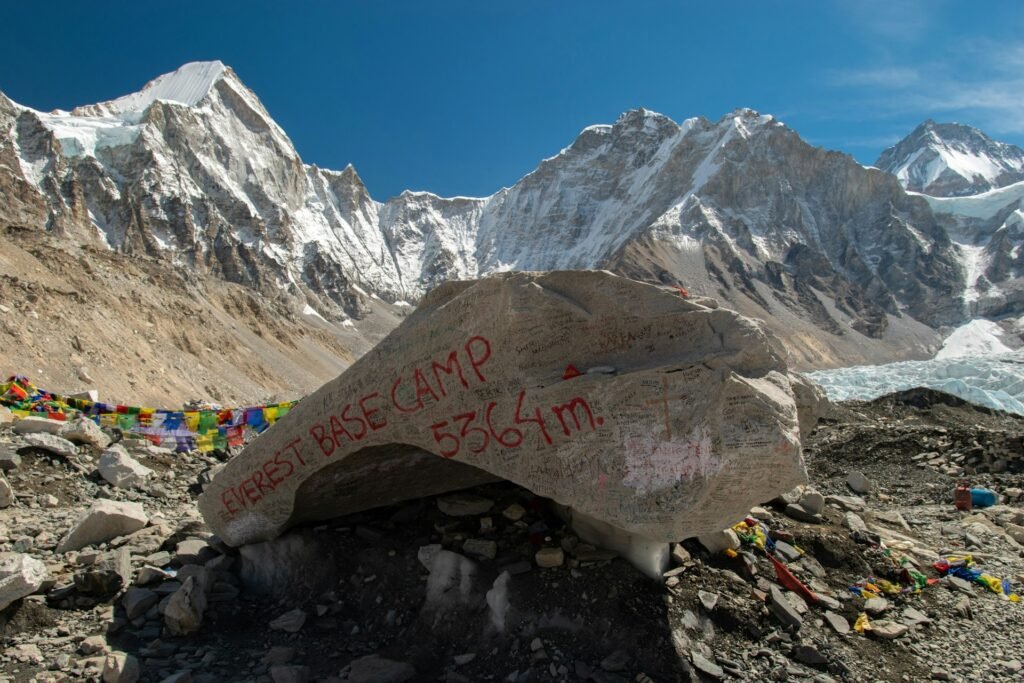
Everyone who comes to Nepal has Everest on their mind. It is almost unavoidable. The mountain is on the currency, on the airline safety cards, on the postcards at every shop in Thamel. Everest Base Camp is the trek people mean when they say they want to “do Nepal.”
But here is something the brochures do not tell you. Standing in a queue of 200 trekkers on a narrow trail above Namche Bazaar, waiting for a yak convoy to pass, is a very different experience from the one you imagined sitting at your desk back home.
Nepal has over 60 established trekking routes. Most tourists walk two of them. And one of those — Langtang Valley — sits just a few hours north of Kathmandu, largely overlooked, genuinely beautiful, and blissfully quiet.
This article compares both routes honestly — so you can decide which one actually fits the trekker you are, not the trekker you think you should be.
Why Everest Base Camp Is the Trek Everyone Wants to Do
The pull of EBC is real, and it is not just marketing. Standing at 5,364 metres with Everest filling the sky above you is one of the most genuinely moving experiences available to a non-climber anywhere on Earth.
The route through the Khumbu region is also extraordinarily beautiful. You pass through Sherpa villages that have not fundamentally changed in generations, cross suspension bridges over glacial rivers, and walk through the gates of Sagarmatha National Park — a UNESCO World Heritage Site — into increasingly dramatic high-altitude terrain.
- The trail follows the same path Hillary and Tenzing Norgay walked in 1953
- You pass Tengboche Monastery, one of the most photographed places in Nepal
- Namche Bazaar — the main trading hub — is a surprisingly vibrant mountain town
- The Khumbu Icefall visible from Base Camp is unlike anything most trekkers have ever seen
The accessibility has improved significantly over the decades. A short flight from Kathmandu lands you in Lukla, and from there the trail is well-marked, heavily serviced with teahouses, and guided by some of the most experienced mountain professionals in the world.
For trekkers who want the full classic Everest Base Camp trekking experience— the cultural immersion, the altitude achievement, the sheer iconic status — EBC delivers in a way that no other route can match. It earns its reputation.
- Standard duration: 14 days with proper acclimatisation
- Maximum altitude: 5,364m at Base Camp, 5,545m at Kala Patthar
- Difficulty: Moderate to challenging — primarily due to altitude, not terrain
- Teahouse availability: Excellent throughout the entire route
The honest trade-off is this: EBC is popular because it is genuinely great. But it is also, in peak season, genuinely crowded.
The Quiet Alternative: Why Langtang Valley Deserves Your Attention
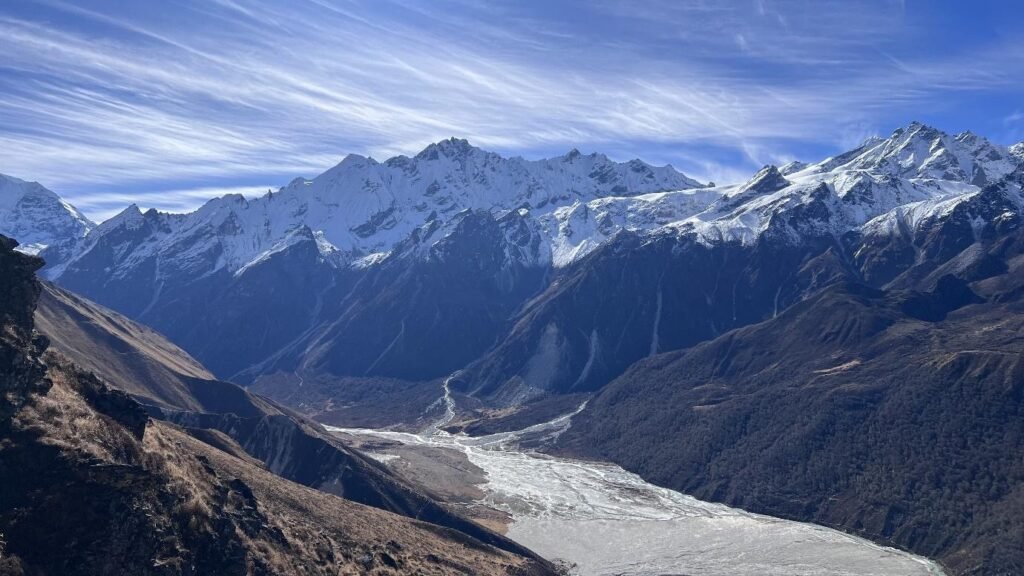
Langtang Valley sits roughly 60 kilometres north of Kathmandu. You can reach the trailhead by a 6–7 hour jeep or bus ride from the capital — no domestic flight required, no Lukla lottery. The valley opens into one of the most underappreciated mountain landscapes in the entire Himalayan range.
The route passes through dense rhododendron and bamboo forest before rising into alpine meadows with views of Langtang Lirung (7,227m), Ganesh Himal, and on clear days the distant outline of the Tibetan plateau. The upper valley feels remote and sacred in a way that the busier EBC trail rarely does anymore.
- Langtang was devastated by the 2015 earthquake and has been slowly, remarkably rebuilt
- The Tamang communities who live here have their own distinct culture, food, and festivals
- Kyanjin Gompa monastery at 3,870m is one of Nepal’s most atmospheric high-altitude temples
- Tserko Ri viewpoint (4,984m) offers a 360-degree panorama that rivals anything on the EBC route
The cultural experience here is different from the Khumbu. The Tamang people of Langtang have Tibetan Buddhist roots and a warmth toward trekkers that has not yet been worn down by decades of mass tourism. Teahouses are family-run in the truest sense — you are often eating dinner at the same table as the family who cooked it.
For a complete Langtang Valley trekking guide covering the full route, permits, and day-by-day itinerary — that resource is worth reading before you book anything.
- Standard duration: 7–10 days
- Maximum altitude: 4,984m (Tserko Ri) — or 3,870m if you skip the viewpoint hike
- Difficulty: Moderate — more forgiving altitude profile than EBC
- Teahouse availability: Good, though fewer options than the Khumbu
The single biggest thing Langtang has going for it in 2026 is what it lacks: queues.
Crowded vs Quiet: A Straight Comparison
Let us put both routes side by side across the factors that actually matter when you are planning a trek.
Crowd Levels
- EBC in peak season (October, April): busy trails, full teahouses, popular viewpoints crowded
- Langtang in peak season: light to moderate traffic — you will share the trail, but you will not queue on it
- EBC off-season (November, March): noticeably quieter — a genuine option for crowd-averse trekkers
- Langtang off-season: almost empty — solitude is essentially guaranteed
Cost
- EBC: Higher overall due to the Lukla flight ($180–$210 each way), longer duration, and higher teahouse prices in the Khumbu
- Langtang: Lower — no domestic flight, shorter duration, lower teahouse prices, fewer permit fees
- Rough cost comparison: EBC total trip approximately $1,400–$2,000 guided. Langtang approximately $600–$1,000 guided.
Difficulty
- EBC: Moderate to challenging — the altitude (multiple nights above 4,000m) is the primary challenge
- Langtang: Moderate — lower sustained altitude, shorter duration, easier logistics
- Both require reasonable cardiovascular fitness — neither requires technical climbing skills
Cultural Experience
- EBC: Deep Sherpa culture, Buddhist monasteries, high-altitude village life
- Langtang: Tamang culture, Tibetan Buddhist influence, more intimate community contact
- EBC culture has become more tourism-oriented in popular spots; Langtang remains more authentic day-to-day
Scenery
- EBC: Raw, dramatic, high-altitude glaciers, icefalls, stark moraine landscape above 4,000m
- Langtang: Lush lower valleys transitioning to alpine — more varied terrain across fewer days
Which Trek Is Right for You?
Choose EBC if:
- You have Everest on your bucket list and want the full iconic experience
- You have 14 days and a budget that covers the additional flight and permit costs
- You have solid cardiovascular fitness and have prepared for sustained high altitude
- You are comfortable trekking in a social, busy environment with fellow trekkers from around the world
Choose Langtang if:
- This is your first high-altitude trek, and you want a less committing introduction to Himalayan trekking
- You have 7–10 days rather than two full weeks
- You prefer solitude, cultural immersion, and a route that feels like a genuine discovery
- You are working with a tighter budget and want to avoid domestic flight costs
- You are based in Kathmandu and want a trek that starts just hours from the city
First-time trekkers in particular often benefit from doing Langtang first. The lower sustained altitude, shorter duration, and more forgiving logistics mean you learn how your body handles high-altitude trekking without the consequences being as serious if something goes wrong.
When to Go on Each Trek
Everest Base Camp — Best Months: October and November are the gold standard for EBC. The post-monsoon air is extraordinarily clear, temperatures are cool but manageable, and the mountain is visible almost every morning. April is the best spring month — rhododendrons in bloom, stable weather, high energy on the trail.
- Avoid: June–August (full monsoon, slippery trails, poor visibility)
- Peak crowds: October and April — book teahouses in advance
- Quieter option: March and November still offer excellent conditions with fewer trekkers
Langtang Valley — Best Months: March and April are stunning in Langtang — the forest sections are alive with rhododendron colour and the views from Tserko Ri are at their clearest. October and November are equally excellent. Because Langtang receives less traffic overall, even peak-season dates feel manageable.
- Avoid: Monsoon season (June–August) — landslide risk is higher than on the EBC route
- Best kept secret: November in Langtang — almost no trekkers, beautiful golden light, sharp mountain visibility
Tips for First-Time Trekkers on Either Route
Whether you choose EBC or Langtang, some preparation principles apply to both — and ignoring them is the most common reason trekkers have a difficult time on the trail.
Preparation:
- Start cardiovascular training 2–3 months before departure — running, hiking with a weighted pack, cycling
- Do not underestimate the importance of broken-in boots — blisters at altitude are miserable
- Consult your doctor about altitude sickness medication (Diamox) — particularly relevant for EBC
Packing:
- Layer system is everything — base layer, mid layer, waterproof shell
- Pack lighter than you think you need — your porter or daypack will carry essentials
- Bring a water purification system — saves significant money on bottled water over 10–14 days
Acclimatisation:
- The golden rule on both routes: never ascend with worsening symptoms
- Drink 3–4 litres of water per day above 3,000m — dehydration accelerates altitude sickness
- On EBC specifically, do not skip the acclimatisation days in Namche and Dingboche — they exist for a reason
- On Langtang, pace yourself on the approach to Tserko Ri — the final ascent gains altitude quickly
One universal tip: hire a licensed local guide. Not because you cannot navigate the trail, but because a good guide reads your health, manages your pace, and makes the difference between a difficult day and a dangerous one.
Final Thoughts: There Is No Wrong Answer Here
Everest Base Camp is one of the great trekking experiences on Earth. It is crowded in peak season because it deserves to be. The scenery, the culture, and the achievement of reaching 5,364 metres are genuinely extraordinary.
Langtang Valley is what Nepal felt like before the trekking industry arrived. Quieter, more intimate, and in some ways more rewarding precisely because you have to make an active choice to go there.
The right trek is not the most famous one or the hardest one. It is the one that matches your time, your budget, your fitness, and the kind of experience you actually want to have in the mountains.
Both trails lead somewhere worth going. Choose the one that fits you — and go.
If you are looking for a trekking and climbing in Nepal contact Himalayan Hero Adventures for best deals:
Email: support@himalayanhero.com
Whatsapp: +9779801127073
